Published on: 25 July 2026
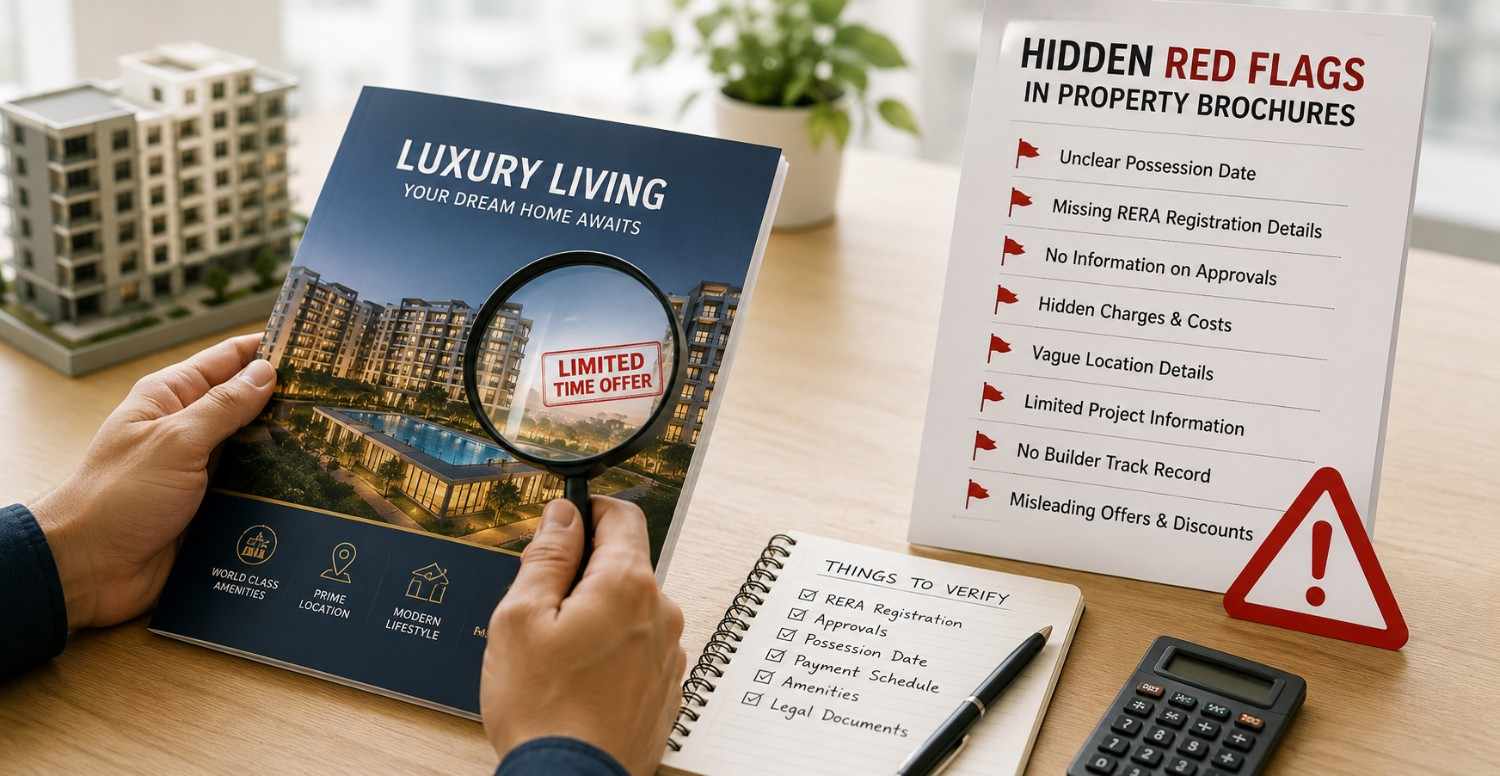
Property brochures are designed to market a project, so they may not include important details like hidden charges, legal approvals, possession timelines, or the actual carpet area. Before booking any property, verify the RERA registration, ask for the complete cost sheet, check the builder's credibility, review legal documents, and visit the project site. Comparing verified projects through trusted property consultants like Search Abode can help you avoid costly mistakes and make a safer property investment.
What if the biggest mistake in your home-buying journey is hiding in the very first brochure you receive? Property brochures often showcase attractive prices, luxury amenities, and stunning visuals, but they may leave out important details like hidden charges, legal approvals, and possession timelines.
In this guide, you'll discover the hidden red flags in property brochures, learn how to verify every claim, and explore practical property buying tips to make a smarter investment. Search Abode helps buyers compare verified projects, check builder credibility, and choose the right property with confidence.
A property brochure is a marketing tool, not a legal document. Its purpose is to attract buyers by showcasing the project's best features. While brochures provide useful information, they don't always include every detail you need to make a safe investment.
Before making any booking, always verify:
Treat the brochure as the starting point of your research, not the final proof.
Most brochures feature stunning 3D renders of the project. These are often labeled as "Artist's Impression."
The final project may differ in:
Tip: Always visit the site and ask for actual construction photos.
A trustworthy brochure should clearly mention the project's RERA registration number.
If it's missing, ask:
This protects you from legal complications and project delays.
Many brochures advertise large apartment sizes based on the super built-up area, making homes appear bigger than they actually are.
Always ask for:
The carpet area tells you the actual usable living space.
Phrases like:
may sound promising but often don't provide a confirmed timeline.
Instead, verify the official possession date through RERA records or builder documents
One of the biggest property brochure red flags is a low advertised price.
The brochure may exclude:
Always ask for the total cost sheet before making a decision.
Many brochures mention:
But they rarely explain:
Ask exactly what is included in your purchase.
Statements like:
can be misleading.
Always verify:
Google Maps and a site visit can reveal the true picture.
A brochure may never mention whether the project has:
Never assume these approvals are in place. Ask to see the supporting documents.
Well-designed floor plans can create the illusion of larger rooms.
Compare:
This helps you understand the actual usable space.
Many brochures highlight:
Some of these projects may still be in the planning stage.
Verify whether the infrastructure is approved or only proposed.
Some builders advertise:
Property prices depend on:
Avoid making investment decisions based only on projected returns.
The smallest text in the brochure often contains the most important information.
Common disclaimers include:
Always read the fine print carefully before signing anything.
Even when the brochure advertises an attractive price, several additional charges may apply.
These commonly include:
Many buyers focus only on the booking amount and later discover these extra expenses. Before making any payment, ask for a detailed cost breakup to understand the actual investment. Search Abode helps buyers review complete pricing, compare projects, and identify hidden costs before they commit.
Before booking any property, don't rely on the brochure alone. Ask these important questions to avoid surprises later.
These simple questions can save you from costly mistakes.
A beautiful brochure should always be backed by genuine documents. Request copies of the following before making any payment.
| Document | Why It Matters |
|---|---|
| RERA Registration Certificate | Confirms legal registration |
| Approved Building Plan | Verifies project approval |
| Land Ownership Documents | Confirms clear ownership |
| Sale Agreement | Explains buyer rights and terms |
| Building Approvals | Ensures legal construction |
| Occupancy Certificate (Ready Property) | Confirms the building is fit for occupancy |
If a builder hesitates to provide these documents, consider it a warning sign.
| Brochure Claim | What You Should Verify |
|---|---|
| Luxury Lifestyle | Actual amenities available |
| Prime Location | Real travel time and connectivity |
| Starting Price | Final cost after all charges |
| Spacious Apartments | Carpet area and room dimensions |
| Ready Possession | Official RERA completion date |
| Premium Construction | Visit the site and inspect quality |
Always compare marketing claims with verified information before making a decision.
Choosing the right property isn't just about finding a good apartment, it's about making a safe investment.
Search Abode simplifies the buying process by helping you:
With professional advice and verified information, buyers can make more confident and informed decisions.
Property brochures may highlight attractive prices, luxury amenities, and beautiful visuals, but they don't always reveal the complete picture. Always verify legal approvals, hidden costs, possession timelines, and the actual carpet area before making your final decision.
Ready to buy with confidence? Search Abode helps you compare verified projects, evaluate builders, and find the right property in Jaipur. Contact Search Abode today for expert guidance and make your home-buying journey simple, safe, and informed.
Yes. They are marketing materials and may not include complete information about costs, legal approvals, or project timelines.
RERA registration improves transparency and helps protect buyers by ensuring the project follows regulatory requirements.
A very low starting price without a detailed cost breakup is one of the most common red flags.
Treat them as conceptual illustrations. Always visit the site or ask for actual construction photos.
Check the RERA certificate, approved building plan, land ownership documents, sale agreement, and other required approvals.