Published on: 18 July 2026
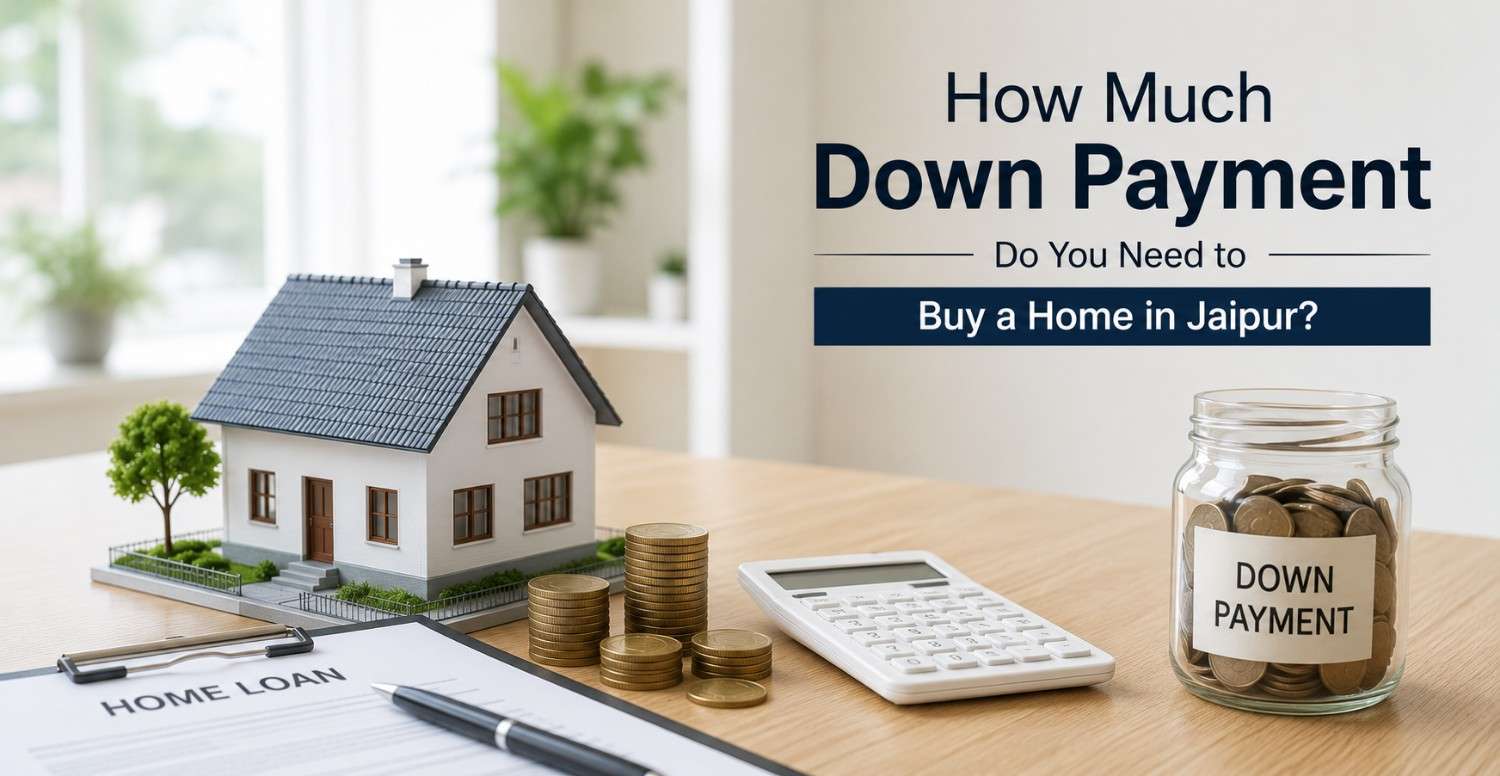
Most homebuyers in Jaipur need a 10%-20% down payment of the property's value, depending on the lender, property price and loan eligibility. Paying a higher down payment can reduce your EMI, lower interest costs, and improve your chances of home loan approval.
Can you really buy your dream home in Jaipur with just a small down payment? It's one of the first questions every homebuyer asks. While finding the right property is important, understanding how much you need to pay upfront is what truly shapes your budget, home loan eligibility, and monthly EMI. Planning your down payment wisely can make the entire buying process easier and more affordable.
In this guide, you'll learn how much Home Down Payment Jaipur buyers typically need, what factors affect the required amount, practical ways to save, and the hidden costs you shouldn't overlook. Whether you're a first-time buyer or an investor, Search Abode helps you find verified residential projects in Jaipur, compare the best options, and make informed property decisions with expert guidance at every step.
A down payment is the amount you pay upfront when buying a home. The remaining amount is financed through a home loan from a bank or housing finance company.
For example, if a property costs ₹50 lakh and the lender finances 80%, you'll need to pay the remaining 20% as the down payment.
A down payment is important because it:
The higher your down payment, the less you need to borrow.
The required down payment depends on the property's value and the lender's loan eligibility criteria. Most banks and housing finance companies finance 75%-90% of the property's value, meaning buyers usually arrange the remaining amount themselves.
Most homebuyers in Jaipur should expect to pay:
Your exact amount may vary based on income, credit profile, and the property you choose.
Generally:
Every lender has different eligibility rules. They consider:
A strong financial profile can improve your chances of securing better loan terms.
| Property Price | Estimated Down Payment | Estimated Loan |
|---|---|---|
| ₹30 Lakhs | ₹3-6 Lakhs | ₹24-27 Lakhs |
| ₹50 Lakhs | ₹5-10 Lakhs | ₹40-45 Lakhs |
| ₹75 Lakhs | ₹7.5-15 Lakhs | ₹60-67.5 Lakhs |
| ₹1 Crore | ₹10-20 Lakhs | ₹80-90 Lakhs |
These figures are examples. Actual loan eligibility depends on lender policies and borrower qualifications.
Several factors determine how much you'll need to pay before receiving your home loan.
Higher-priced properties usually require a larger upfront contribution. As the property's value increases, the lender's financing percentage may decrease.
Banks assess your financial capacity before approving a loan. Your income, existing liabilities, and repayment ability determine how much financing you receive.
A good credit score increases lender confidence.
Benefits include:
Maintaining timely repayments before applying for a home loan can significantly improve your profile.
Lenders calculate whether your monthly income can comfortably support the EMI.
Higher income generally means:
The financing offered may vary depending on whether you're buying:
Each property category has different lending norms.
Banks and housing finance companies have different internal policies regarding:
Comparing lenders can help you secure better financing.
Although it requires more savings upfront, a larger down payment offers several long-term advantages.
Borrowing less means your monthly repayments become more manageable, reducing financial stress.
Since the loan amount is smaller, you'll pay significantly less interest over the loan tenure.
A higher contribution demonstrates financial stability and reduces the lender's risk.
A lower loan balance gives you more flexibility to manage future expenses and unexpected situations.
Paying the minimum possible down payment may seem attractive, but it can increase your overall financial burden. Before deciding, it's important to understand the long-term impact.
A smaller down payment means borrowing more money. As a result, your monthly EMI increases, which can put pressure on your household budget.
Since you're taking a larger loan, you'll pay more interest over the loan tenure. Even a small increase in the loan amount can significantly raise the total repayment.
High EMIs may leave less room for other financial goals such as emergency savings, investments, travel, or your child's education.
A larger loan means you'll stay in debt for longer and may face greater financial stress if interest rates increase.
Buying your first home becomes easier with proper planning. Keep these tips in mind before applying for a home loan.
Interest rates, processing fees, and loan terms vary between banks and housing finance companies. Comparing options can help you save money over the long term.
A strong credit history improves your chances of getting approved and may help you secure better loan terms.
Select an EMI that fits your monthly budget. Avoid stretching your finances just to buy a larger property.
Don't use all your savings for the down payment. Having an emergency fund provides financial security after you move into your new home.
Always verify legal approvals, ownership records, and RERA registration before making any payment.
Buying a property involves much more than arranging a down payment. From selecting the right location to verifying projects and understanding financing, expert guidance can save both time and money.
Search Abode helps homebuyers by:
Whether you're purchasing your first home or looking for a long-term investment, professional guidance can simplify the process.
Buying a home in Jaipur starts with smart financial planning, and understanding your Home Down Payment Jaipur requirement is a key part of that journey. Choosing the right down payment can reduce your EMI, lower your overall interest cost, and make homeownership more affordable. By planning ahead and budgeting for additional expenses, you can invest with greater confidence.
Ready to buy your dream home in Jaipur? Search Abode is here to help you find verified residential projects, compare the best property options, and receive expert guidance from property search to final purchase. Contact Search Abode today and take the next step toward owning the right home with confidence.
Most buyers typically need a down payment of 10% to 20% of the property's value, depending on the lender and loan eligibility.
Yes. A higher down payment reduces the loan amount, resulting in lower monthly EMIs and lower total interest costs.
In some cases, yes. Eligibility depends on the property's value, your income, credit score, and the lender's financing policy.
No. It's wise to keep an emergency fund for unexpected expenses after purchasing your home.
Apart from the down payment, consider stamp duty, registration charges, legal fees, interior work, maintenance charges, and moving expenses.