Published on: 29 October 2026
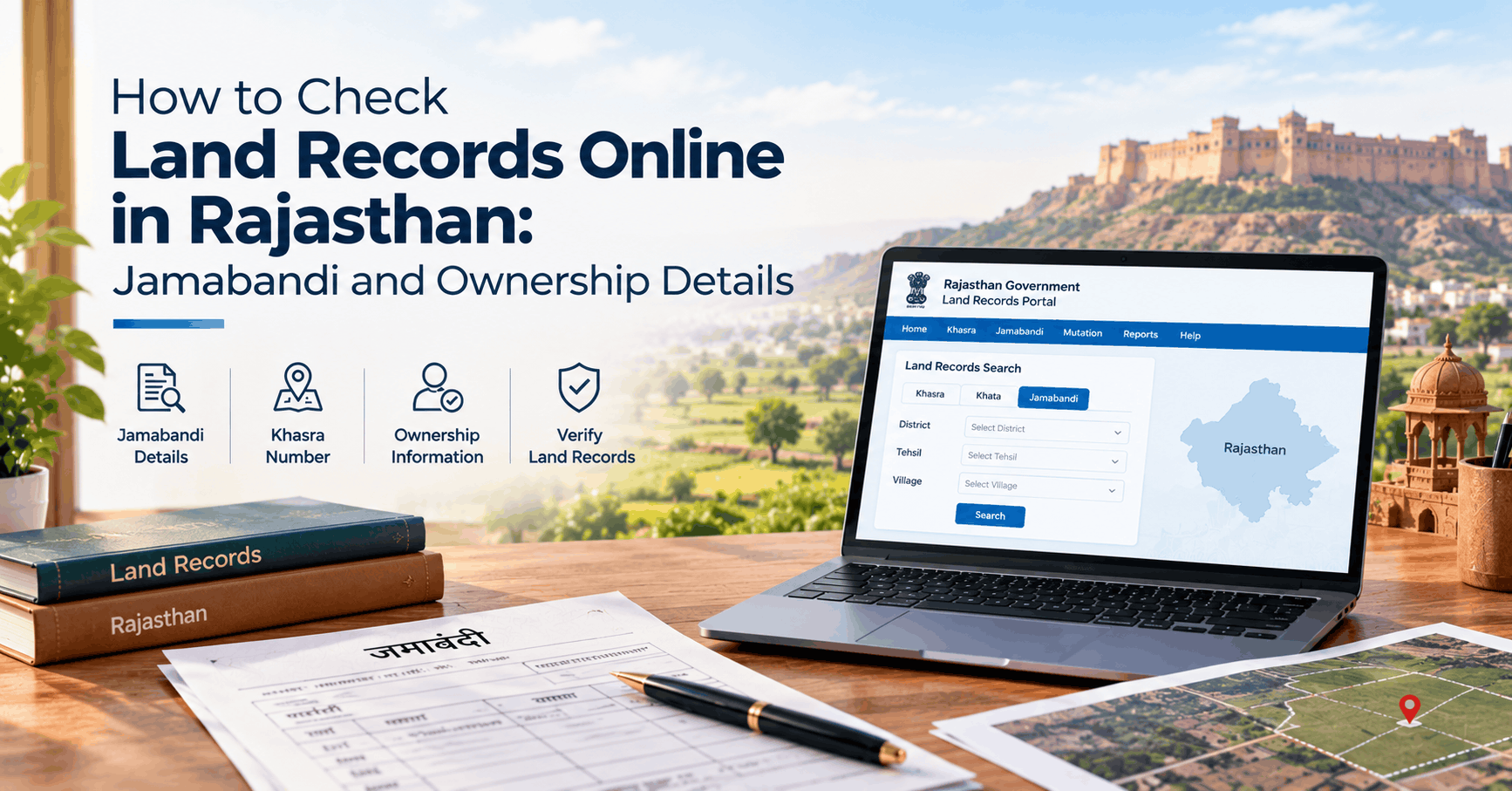
How to Check Land Records Online in Rajasthan: Jamabandi and Ownership Details
Quick answer
You can check Rajasthan land records through the state's official Apna Khata portal. Select the Jamabandi Nakal service, choose the relevant district, tehsil and village, and search using an available option such as the Khata number, Khasra number or landholder's name. Open the matching record and compare the recorded name, land identifiers and area with the details provided by the seller. Remember that an online Jamabandi is a useful starting point, not complete proof of clear legal ownership. For official or legal purposes, you may need an authorised copy and further property verification.
Before buying land, one simple check can help you avoid a major property mistake: confirming whether the land details match the official revenue records. A seller may show you property papers, but do you know how to check the recorded landholder's name, Khasra number and land area yourself? Rajasthan provides online access to land records, making it easier to begin this verification from home.
Learning how to check Rajasthan land records online can help you understand Jamabandi, verify Khata and Khasra details, review recorded ownership information and identify discrepancies before moving forward. Whether you are researching agricultural land or exploring properties for sale in Jaipur, this guide explains the process in simple steps, what each record means and which additional checks are important before buying land.
What Are Rajasthan Land Records?
Land records are government-maintained records containing information about landholdings, recorded rights and revenue-related details. Rajasthan's online land-record system allows people to access certain records without first visiting a revenue office.
These records can help people who are researching agricultural land, checking inherited property or considering a land purchase. They provide useful information about the land and its recorded holders, helping users identify differences between the online entry and the documents available to them.
However, not every property document serves the same purpose. Jamabandi, a registered sale deed, a mutation record and a land map provide different types of information. A reliable verification process considers these records together rather than relying on only one document.
What Is Jamabandi in Rajasthan?
Jamabandi is a land-revenue record containing information about recorded landholdings and associated rights. A copy of this record is commonly called Jamabandi Nakal.
Depending on the particular record, it may include:
- Name of the recorded landholder or Khatedar
- Khata number and Khasra numbers
- Recorded land area
- Details of co-holders, where applicable
- Revenue-related entries
- Certain recorded rights, liabilities or changes, where available
Jamabandi helps you compare the information in government revenue records with the details supplied by a seller. However, it does not independently resolve every question about legal title, disputes, mortgages or the seller's authority to transfer the property.
How to Check Rajasthan Land Records Online Step by Step
Follow these steps to access the available land-record information.
Step 1: Open the Official Apna Khata Portal
Visit the official Apna Khata portal to access land records online.
Check the website address carefully to ensure you are using the official government portal rather than an unofficial website.
Step 2: Select Jamabandi Nakal
On the homepage, look for the option labelled Jamabandi Nakal. This service allows users to view available land-revenue record information.
Select it to begin the search process. The exact screen layout and available options may change as the portal is updated.
Step 3: Choose the District
Select the district where the land is located.
For example, if the property is in Jaipur district, choose Jaipur. Do not select a district simply because the seller lives there; the location must match the land being checked.
Step 4: Select the Tehsil and Village
Choose the correct tehsil and village from the available lists.
Land records are organised according to administrative location. If you select the wrong village or tehsil, you may see a different record or fail to find the relevant entry.
If the village name has changed or appears under a different administrative unit, confirm the current details with the relevant revenue office.
Step 5: Choose a Search Option
Depending on the options displayed by the portal, you may be able to search using the following details:
- Khata number: Useful when you already know the land account number.
- Khasra number: Useful when you know the identifier of the specific land parcel.
- Landholder's name: Helpful when you do not have the relevant numbers.
Select the option that matches the information you have. If you search by name, examine the results carefully because similar names may appear in different records.
Step 6: Open the Relevant Record
Once you find a matching entry, review the available details.
Check the recorded landholder's name, Khata number, Khasra number and area. Confirm that the district, tehsil and village are also correct.
If several land parcels or co-holders appear in the record, make sure you understand which entry relates to the property you are investigating.
Step 7: Save the Information for Reference
If the portal provides a viewing, printing or download option, save the record for your personal reference.
The portal states that its online Jamabandi information may not be updated immediately after every mutation and that the information copy should not be used as a certified or authorised copy for court or official purposes. Follow the portal's instructions to obtain the appropriate authorised copy when required.
How to Verify Land Ownership Records in Rajasthan
Finding a Jamabandi entry is only the first step. You should compare the recorded information with the property's supporting documents.
1. Check the Recorded Landholder's Name
Compare the name in Jamabandi with the seller's identity documents and property papers.
If the names differ, there may be an inheritance, transfer, name change or mutation-related reason. Ask for supporting documents and clarify the discrepancy before proceeding.
A difference in names should not automatically be treated as proof of fraud, but it should never be ignored.
2. Verify the Khasra Number
A Khasra number identifies a particular land parcel in the relevant revenue-record system.
Compare the number in Jamabandi with the seller's documents and any available land map. If the numbers do not match, ask the relevant revenue authority to clarify the discrepancy.
A mismatch may indicate that you are looking at a different parcel or that further verification is needed.
3. Compare the Recorded Land Area
Check the area mentioned in the land record against the area described in the sale documents.
Pay attention to measurement units. Different documents may use different units, so convert the figures carefully before comparing them.
If the recorded area differs from the seller's claim, seek clarification before making a payment or signing an agreement.
4. Review Joint Ownership
Some land is recorded in the names of multiple holders. In these cases, check the recorded shares and establish whether the seller has the legal right to transfer the specific interest being offered.
A person listed as one of several holders cannot automatically be assumed to have the right to sell the entire property independently. The relevant ownership documents and rights of all parties must be reviewed.
5. Check Mutation Details
Mutation, commonly called Namantaran or Dakhil Kharij, refers to updating revenue records following a relevant event, such as a sale or inheritance.
If the seller claims to have purchased or inherited the land recently, check whether the relevant change appears in the available record. Ask for the registered transfer document and mutation details if the online entry still shows an earlier holder.
An outdated record does not, by itself, settle the legal ownership question. The underlying documents and applicable legal position must also be examined.
What Is the Difference Between Jamabandi, Khasra and Khata?
These terms are related but have different meanings.
| Term | Meaning | Why It Matters |
|---|---|---|
| Jamabandi | A land-revenue record containing information about recorded holdings and rights | Helps review recorded landholder and land details |
| Khasra number | An identifier for a particular land parcel | Helps identify the specific parcel being checked |
| Khata number | An account identifier associated with a landholding or group of land parcels | Helps locate the relevant account in the records |
| Mutation | An entry updating revenue records after a relevant change | Helps track changes recorded in the revenue system |
| Bhu Naksha | A land map showing mapped parcels and available boundary information | Helps compare the mapped parcel with the land described in documents |
Understanding these differences makes it easier to interpret the information correctly. A Khasra number identifies a parcel, while a Khata number helps locate the relevant account. Jamabandi provides a broader record of the landholding and associated entries.
How to Check Land Maps in Rajasthan
Jamabandi provides textual revenue-record information, while a land map can help you understand the location and mapped boundaries of a parcel.
Rajasthan provides access to the Bhu Naksha service through its land-record system. Where the relevant map is available, use the location details and Khasra number to find the corresponding parcel.
When reviewing a map, compare the parcel identifier and available boundary information with the seller's documents. If the boundaries on the ground do not match the map or the stated area, seek clarification from the relevant authority.
A digital map is useful for preliminary checking, but it does not replace official measurement or demarcation where required.
What If Rajasthan Land Records Show Incorrect or Outdated Information?
An online record may not reflect a recent transaction, or it may contain an error in a name, area or another entry.
If you notice a discrepancy, follow these steps:
- Save the available record and note the relevant Khata and Khasra numbers.
- Compare the entry with the registered deed, mutation documents and other supporting papers.
- Check whether a mutation application has been submitted and review its status if the portal provides that facility.
- Contact the relevant revenue office or authorised service channel to understand the correction process.
- Submit the required documents or application through the appropriate procedure.
Do not assume that an online entry will change automatically after a sale or inheritance. The relevant process may need to be completed, and some information may not be updated immediately.
Is Online Jamabandi Enough to Verify Land Before Buying?
No. Online Jamabandi is an important preliminary check, but it does not replace complete property due diligence.
Before buying land, consider the following checks:
- Compare Jamabandi with the registered sale deed and previous ownership documents.
- Confirm the seller's identity and legal authority to transfer the property.
- Review relevant mutation records and inheritance documents, where applicable.
- Check the land map and boundaries, and arrange official demarcation if necessary.
- Investigate relevant mortgages, encumbrances, litigation and other legal restrictions.
- Confirm land use, conversion status and applicable development or planning permissions where relevant.
- Obtain an authorised or certified record when required for formal or legal purposes.
For details about ownership documents and legal verification, read our guide on property title search. A title search and a Jamabandi check serve related but different purposes, and both may be necessary when assessing a property.
What If the Land Is a Plot in Jaipur?
If the land is an urban or residential plot, revenue records may be only one part of the verification process. Depending on the property, you may also need to check the allotment documents, lease deed or Patta, approved layout, land-use permissions and relevant development authority records.
For example, a plot advertised as JDA-approved should have supporting documents for that claim. You can read our guide to JDA-approved plots in Jaipur to understand the additional checks relevant to such plots.
Do not assume that a land record alone proves that a plot has all the required planning approvals or can be used for the intended purpose.
Common Mistakes to Avoid When Checking Rajasthan Land Records Online
Searching in the Wrong Village
Even if the district is correct, selecting the wrong tehsil or village may lead to an incorrect result. Confirm the property's exact administrative location before searching.
Relying Only on the Seller's Name
Similar names can appear in different records. Verify the Khasra number, Khata number, village and other details rather than relying on a name alone.
Assuming Jamabandi Proves Clear Ownership
Jamabandi shows information recorded in the revenue system, but it does not independently resolve every issue relating to legal title, disputes, mortgages or the seller's authority to transfer the property.
Ignoring Mutation Status
If a sale or inheritance has taken place, check the relevant documents and mutation status instead of assuming that the online record has already been updated.
Treating an Information Copy as a Certified Record
The ordinary online copy is intended for information. If you need an authorised record for a legal or official purpose, follow the portal's instructions for obtaining the appropriate copy.
Conclusion
Checking Rajasthan land records online through the official land-record portal is a practical first step for understanding the recorded details of a land parcel. By reviewing Jamabandi, the recorded landholder's name, Khata and Khasra numbers, land area and mutation entries, you can identify discrepancies and understand which documents need further checking.
Before purchasing land, compare the online information with registered documents, maps and other relevant legal records. Obtain an authorised copy when required and seek professional advice if the ownership history or property details are unclear. If you are also comparing residential options, our guide to flats for sale in Jaipur can help you explore the market while keeping proper property verification part of your decision.
Frequently Asked Questions
Visit the official Apna Khata portal, select Jamabandi Nakal, choose the district, tehsil and village, and search using an available identifier such as the Khata number, Khasra number or landholder's name.
Yes. Apna Khata is Rajasthan's government land-record portal. Use the official website to access the available land-record services.
Name-based search may be available through the portal. Verify the result using the village, Khata number, Khasra number and other details because similar names can appear in different records.
The portal states that its online information copy should not be treated as a certified or authorised copy for court or official purposes. Follow the portal's instructions to obtain the required authorised copy through the designated channel.
Ask for supporting ownership and transfer documents, including relevant registered deeds and mutation records. Have the discrepancy reviewed by the appropriate revenue authority or a qualified property lawyer before proceeding.
Rajasthan provides access to Bhu Naksha services. The availability of map details depends on the relevant land record. A map helps with preliminary identification, but official demarcation may be needed to resolve boundary disputes.