Published on: 3 November 2026
How Can NRIs Register Property in India Without Visiting India?
Quick answer
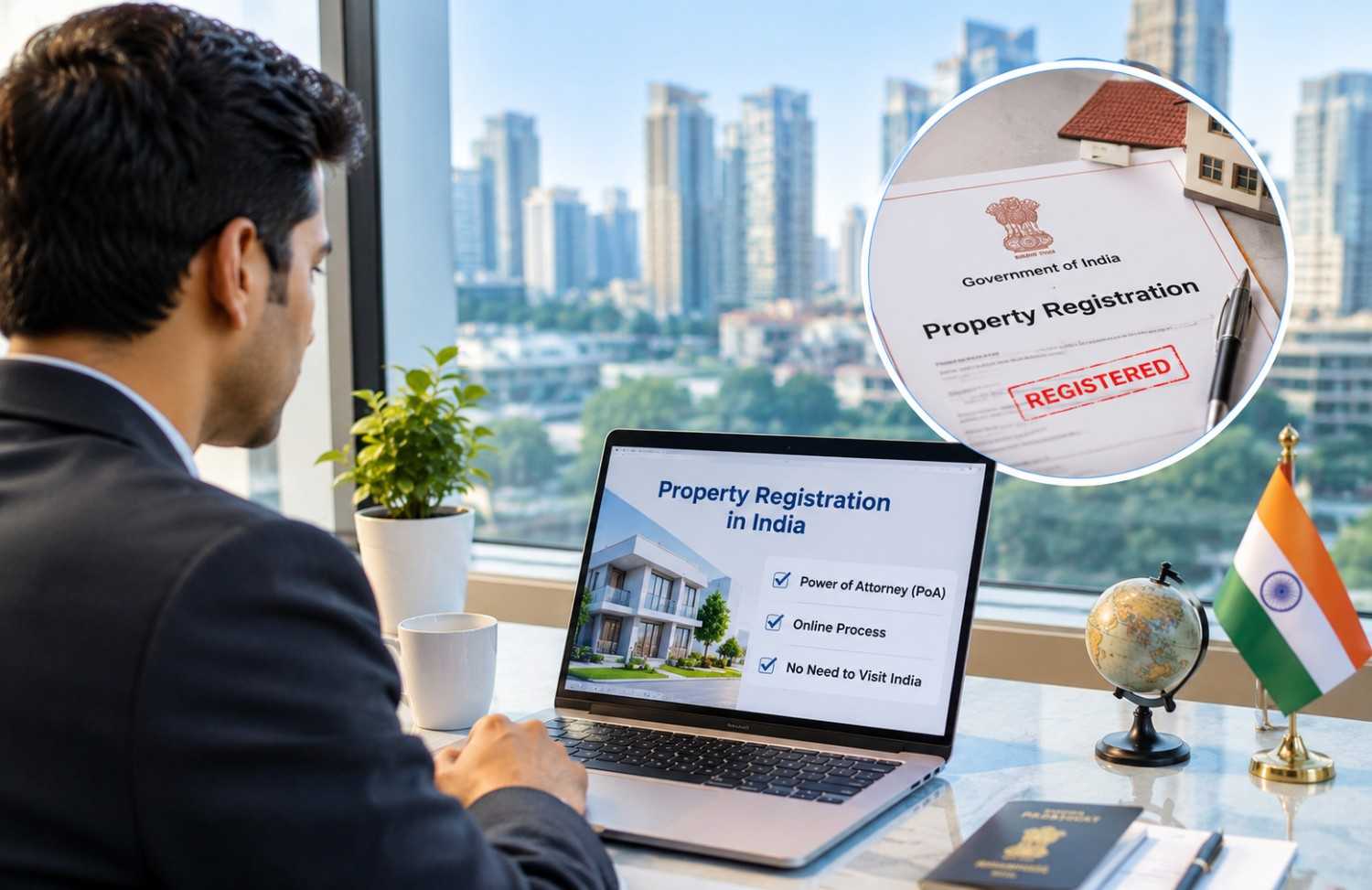
NRIs can register property in India without visiting by authorising a trusted representative through a properly executed and authenticated Special Power of Attorney (PoA). The representative can handle documentation, sign authorised papers and complete registration formalities on their behalf, subject to applicable legal requirements. NRIs must also follow FEMA regulations and pay the applicable stamp duty and registration charges.
Buying a property in India while living abroad can be an exciting investment opportunity, but travelling thousands of kilometres just to complete registration formalities is not always practical. Many Non-Resident Indians (NRIs) want to purchase a home, invest in real estate or secure property for their families without leaving their country of residence.
The good thing is that NRI buying property in India does not necessarily require physical presence during every stage of the registration process. With a properly executed and authenticated Power of Attorney (PoA), an NRI can authorise a trusted representative in India to complete specified legal formalities, sign relevant documents and present the sale deed for registration, subject to applicable laws and local Sub-Registrar requirements.
Key Takeaways
- NRIs can purchase and register eligible residential and commercial properties in India without travelling to the country.
- A Special Power of Attorney (PoA) allows an authorised representative in India to handle specified property registration formalities.
- NRIs can execute a PoA through an Indian Embassy, Consulate or an eligible notary public abroad, subject to applicable authentication requirements.
- The original PoA may need to be stamped or adjudicated in India according to the relevant state's laws.
- Essential documents include a passport, PAN card, overseas address proof, authenticated PoA and property-related documents.
- Property payments must follow FEMA (Foreign Exchange Management Act) regulations and use permitted banking channels.
- Stamp duty, registration charges and applicable tax obligations must be checked before completing the transaction.
Can NRI Buy Property in India Without Visiting?
Yes. NRIs can purchase eligible fixed properties in India without physically visiting the country. The Foreign Exchange Management Act (FEMA) and Foreign Exchange Management (Non-Debt Instruments) Rules, 2019 regulate property transactions involving NRIs and Overseas Citizens of India (OCIs).
Generally, NRIs and OCIs can purchase:
- Residential apartments and independent houses.
- Commercial properties and office spaces.
- Other permitted fixed properties, subject to applicable regulations.
However, they generally cannot purchase agricultural land, plantation property or farmhouses under the standard NRI property acquisition provisions. Inherited or gifted properties may be treated differently under applicable rules.
Payments must be made through permitted banking channels, including money transfer from abroad or eligible NRE, FCNR(B) and NRO account funds. Payments through traveller's cheques and foreign currency notes are not permitted.
How Can NRIs Register Property in India From Abroad?
The most common approach is to appoint an authorised representative through a Power of Attorney. Here is how the process generally works.
1. Choose a Trusted Representative in India
First, find a reliable person who can represent you during the property purchase and registration process. This could be a family member, close relative or another trusted individual.
Your representative may be authorised to:
- Coordinate with the property developer or seller.
- Complete documentation and verification formalities.
- Sign specified property-related documents.
- Pay applicable registration charges on your behalf.
- Present the sale deed before the Sub-Registrar.
Choose someone trustworthy because this person will act on your behalf in legally significant matters.
2. Prepare a Special Power of Attorney (PoA)
A Special Power of Attorney is generally better to a general PoA for property transactions because it limits the representative's authority to clearly defined activities.
The document should mention:
- Full name and overseas address of the NRI.
- Passport details and other identification information.
- Full details of the authorised representative.
- Property description, where available.
- Specific powers granted to the representative.
- Authority to sign and present the sale deed.
- Validity and other applicable conditions.
Clearly defining the representative's powers can reduce the risk of misuse and unnecessary legal complications.
3. Get the Power of Attorney Attested Abroad
Once drafted, the NRI must execute the PoA according to the applicable authentication requirements.
Common options include:
- Indian Embassy or Consulate: Execute the document before the authorised Indian consular officer, following the mission's procedure.
- Notary Public: Execute it before a notary public in the country of residence, subject to applicable authentication requirements, including apostille or legalisation where required.
The correct procedure depends on the country where the document is executed. Check the **Ministry of External Affairs apostille and attestation guidelines and the relevant Indian Embassy or Consulate's instructions before signing.
4. Send the Original PoA to India
After completing the attestation or authentication process, send the original Power of Attorney to your authorised representative in India.
The representative should check that:
- All pages are properly signed and authenticated.
- The document contains the required identification details.
- The powers granted are clear and specific.
- The document meets the relevant state registration requirements.
In many cases, the PoA must also be stamped or adjudicated in India within the prescribed period. Stamp duty and procedures vary by state.
5. Complete Property Verification and Documentation
Before proceeding with registration, verify the property's legal status and ownership details. This is particularly important when purchasing a property remotely.
Check the following:
- Sale deed and ownership history.
- Title documents and encumbrance details.
- Approved building plans and relevant permissions.
- RERA registration, where applicable.
- Property tax and outstanding dues.
- Identity and ownership details of the seller
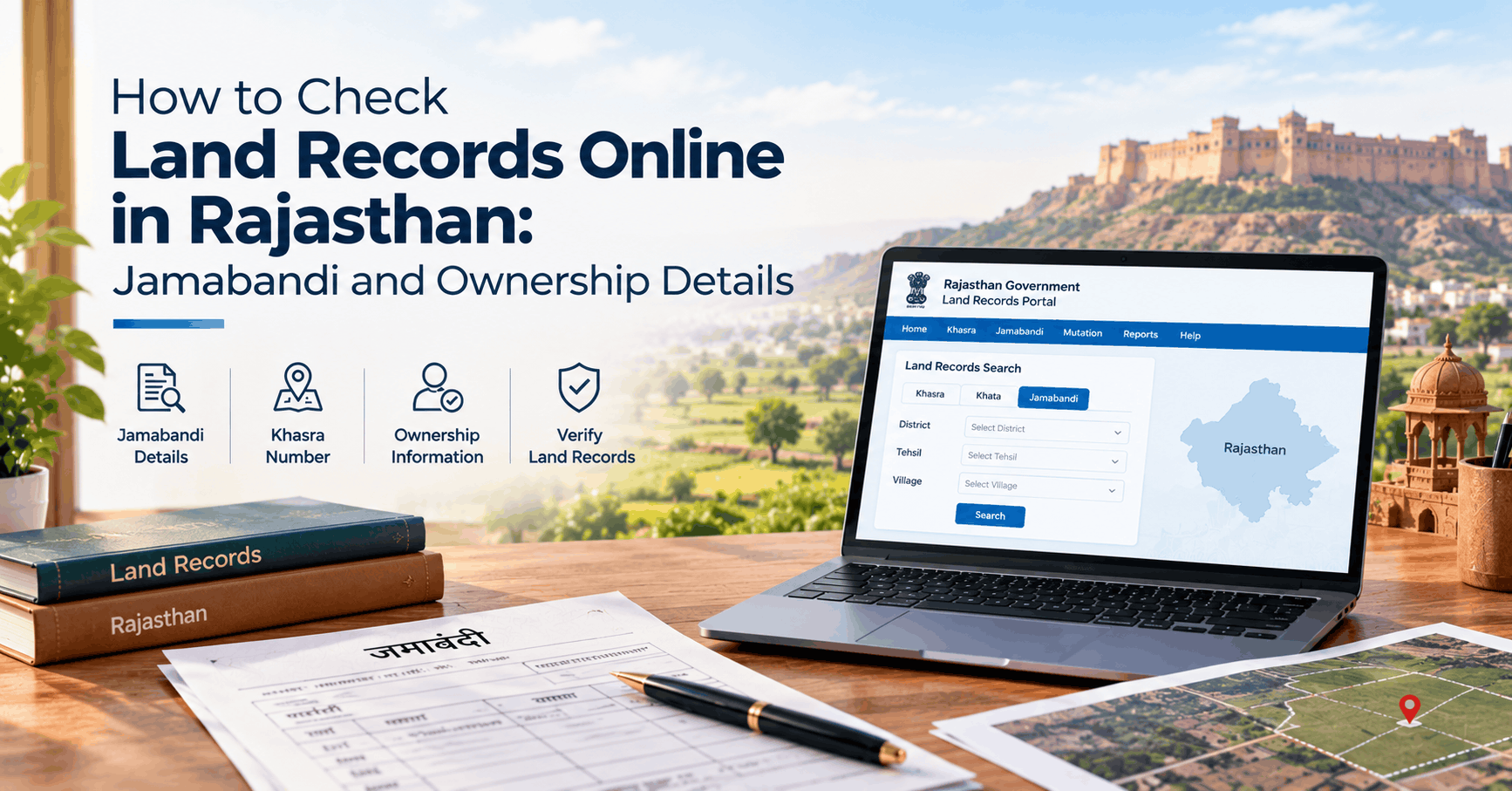
If you are purchasing land in Rajasthan, you can also learn how to check land records online in Rajasthan to review Jamabandi, Khasra and recorded ownership details. Remember that online land records are only one part of complete legal verification.
For residential projects, understanding the benefits of RERA for homebuyers in India can help you check project registration and other relevant compliance details.
6. Complete Sale Deed Registration Through Your Representative
After the agreement and documentation are finalised, the seller and authorised representative can coordinate the execution and registration of the sale deed.
Under Sections 32 and 33 of the Registration Act, 1908, an authorised agent can present documents for registration when the Power of Attorney meets the prescribed authentication requirements.
Your representative will generally:
- Coordinate the registration appointment.
- Present the required documents before the appropriate Sub-Registrar.
- Complete applicable identity verification and registration formalities.
- Pay the applicable stamp duty and registration charges.
- Collect the registered sale deed after completion.
Local procedures, biometric requirements and personal appearance rules may differ. Therefore, confirm the exact requirements with the concerned Sub-Registrar before proceeding.
Documents Required for NRI Property Registration in India
NRIs should prepare the necessary identification, financial and property-related documents before starting the registration process.
| Document | Purpose |
|---|---|
| Valid Indian passport | Identity verification |
| PAN card | Tax and financial compliance |
| OCI card, if applicable | Overseas Indian status verification |
| Overseas address proof | Current residential address |
| Special Power of Attorney | Authorises the representative |
| Sale agreement | Records agreed transaction terms |
| Property title documents | Establishes ownership history |
| Payment proof | Records permitted banking transactions |
| Passport-size photographs | Registration formalities |
Additional documents may be required depending on the property type, state regulations and individual circumstances.
Power of Attorney vs Visiting India Personally
NRIs can generally choose between completing the registration process personally or authorising a representative.
| Particulars | Through PoA | Personal visit |
|---|---|---|
| Physical presence | Generally not required for authorised steps | Required |
| Travel expenses | Lower | Higher |
| Documentation | Required authenticated PoA | Requires personal identification |
| Registration formalities | Completed by representative | Completed personally |
| Convenience | Suitable for overseas buyers | Suitable for direct involvement |
Both methods can be legally valid when applicable requirements are fulfilled.
Important Legal and Financial Considerations for NRI Buyers
Before completing a property transaction, NRIs should keep the following points in mind:
Stamp Duty and Registration Charges
Stamp duty and registration charges apply to property transactions in India. Rates depend on the state, property value, property type and applicable concessions.
For example, NRIs purchasing property in Rajasthan should check the prevailing Rajasthan stamp duty and registration fee schedule before finalising the transaction.
FEMA Compliance and Payment Regulations
All property payments must follow FEMA regulations. Use permitted banking channels and maintain transaction records, including remittance receipts and bank statements.
Tax Deduction at Source (TDS)
TDS requirements depend on the residential status of the seller and the applicable income-tax law. Transactions involving a resident seller and a non-resident seller may follow different provisions.
NRIs should consult a tax professional to determine the correct TDS treatment, applicable rate and reporting requirements before releasing payments.
Conclusion
NRIs can register properties in India without travelling to the country by appointing an authorised representative through a properly executed and authenticated Special Power of Attorney. From preparing documents and verifying ownership to completing sale dead registration, the process can be managed remotely when applicable FEMA, Registration Act and state-specific requirements are followed.
However, successful registration should not be the only priority. Buyers should conduct proper legal verification, understand stamp duty and tax obligation and appoint a reliable representative. Whether you are purchasing a family home or exploring NRI property investment opportunities, Search Abode can help you explore options while making informed real estate decisions.
Frequently Asked Questions
Yes, NRIs can buy and register eligible properties in India without visiting by appointing an authorised representative through a properly executed Power of Attorney (PoA).
An NRI can register property from abroad by preparing a Special Power of Attorney, getting it authenticated through the appropriate Indian Embassy, Consulate or eligible notary, and authorising a representative in India to complete registration formalities.
No, Power of Attorney is not mandatory if the NRI is personally present for registration. However, it is generally required when an authorised representative handles the registration on their behalf.
Yes, an NRI can authorise a trusted family member or another eligible person in India through a valid Power of Attorney to manage specified property-related activities.
Yes, NRIs can generally purchase residential apartments, independent houses and commercial properties in India under applicable FEMA regulations.
Generally, NRIs and OCIs cannot purchase agricultural land, plantation property or farmhouses in India under the standard FEMA property acquisition rules. Certain inheritance-related exceptions may apply.